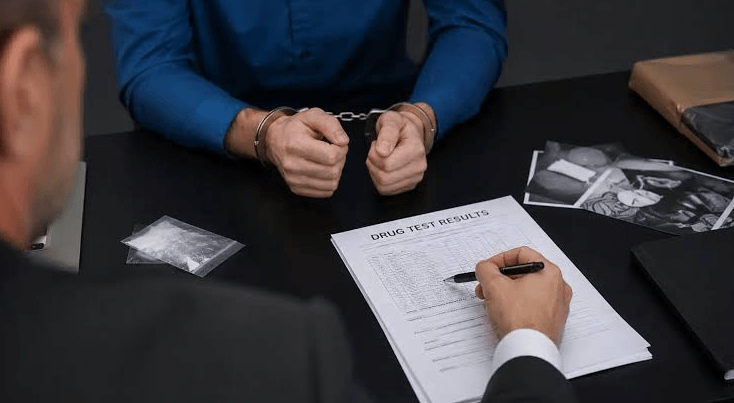
A plastic bag in a car, a text message on a phone, or a few seconds of video can change the direction of a criminal case. For anyone facing allegations in North Texas, speaking with a defense attorney for Dallas drug charges early can help identify what the evidence actually proves and where questions remain.
The common assumption is that a drug arrest is mostly about what police found. In Dallas, the bigger issue can be how officers found it, who controlled it, how it was tested, and whether the evidence supports the specific charge. That leads to a simple but important point: a drug case should be examined piece by piece rather than judged by the accusation alone.
1. Start With the Traffic Stop or Search
Many drug cases begin during a traffic stop. An officer may stop a vehicle for an alleged traffic violation and later develop grounds to search the vehicle. The sequence matters.
A defense review should start with the first moment of police contact. The reason for the stop, the length of the encounter, statements made by the driver or passengers, and the events leading to a search can all affect the case.


Questions worth examining include:
- Why was the vehicle stopped?
- Did the stop last longer than the original purpose required?
- Did someone give consent to a search?
- Did police rely on a warrant?
- What does body camera footage show?
The Fourth Amendment protects against unreasonable searches and seizures. Texas law also establishes requirements for search warrants, including a probable cause showing supported by facts in a sworn affidavit. The Texas Code of Criminal Procedure provides the state’s statutory framework for search warrants.
A search issue does not automatically end a prosecution. However, it can become an important part of a defense when evidence was obtained improperly.
2. Separate Proximity From Actual Possession
Finding drugs near someone does not answer every legal question.
This becomes especially important in Dallas cases involving vehicles, apartments, hotel rooms, or other shared spaces. Several people may have access to the same area, while only one person is accused of possessing the substance.
Texas drug prosecutions can involve different penalty groups, and the substance and amount can affect the potential classification and punishment. The Texas Controlled Substances Act lists controlled substances under schedules and penalty groups. The Texas Health and Safety Code provides the statutory framework for controlled substances.
Possession cases may raise questions such as:
Was the accused aware the substance existed?
Did the person exercise care, custody, or control over it?
Was the substance found in an area exclusively controlled by that person?
Were other people able to access the same location?
Did police find fingerprints, messages, photographs, or other evidence connecting the person to the substance?
These details can matter when prosecutors rely on constructive possession. Being in the same room or vehicle as an illegal substance is not the same factual question as proving who knowingly controlled it.
3. Look Beyond the Substance to the Testing
A substance recovered during an arrest still needs to be identified through admissible evidence.
That makes laboratory testing an important part of many drug cases. Police may seize a substance, package it, transfer it for testing, and later rely on a laboratory report to establish what it was.
Each stage deserves attention.
A defense review can examine the testing process, laboratory records, evidence packaging, transfer records, and chain of custody. Chain of custody refers to the documentation showing how evidence was handled from collection through later examination.
A problem with paperwork does not automatically make evidence inadmissible. Still, unexplained gaps or inconsistencies can create questions about whether the item presented later is the same item originally seized.
This is particularly important when the prosecution’s case depends heavily on a laboratory result. A defendant should know what was tested, how it was tested, and whether the records support the conclusion presented in court.
4. Treat Digital Evidence as Part of the Case
Drug investigations in Dallas are no longer limited to physical evidence.
Phones, text messages, social media accounts, photographs, location information, and other digital records can become part of a prosecution. A message that appears suspicious when viewed alone may have a different meaning when the surrounding conversation is considered.
The same principle applies to photographs, contact lists, payment records, and location data. Investigators may use these records to support allegations involving possession, delivery, distribution, or conspiracy.
The defense should therefore ask where digital evidence came from and how it was obtained.
Was the phone searched with proper legal authority?
Was a warrant required?
Does the complete conversation tell the same story as a single message?
Can the prosecution establish who actually sent or received the communication?
Does location information prove presence, or merely place a device in a particular area?
Digital evidence can be powerful, but context matters. A single message rarely explains an entire relationship or transaction.
5. Examine the Charge and the Possible Path Forward
Not every drug case follows the same path. Texas law treats controlled substances differently depending on the substance, amount, and alleged conduct. A possession case can raise different issues from an allegation involving delivery or manufacturing.
The potential consequences can also extend beyond a sentence. A conviction may affect employment, professional licensing, housing, education, and other parts of a person’s future.
For some eligible defendants in Dallas County, diversion or treatment-focused programs may also be relevant. Eligibility depends on factors such as the charge, criminal history, and program requirements. That means the right question is not simply, “What is the punishment?”
It is also:
“What legal options exist at this stage of this particular case?”
That question should be addressed before making decisions about a plea or other resolution.
See also: Evidence That Can Support a Motorcycle Accident Claim
Why Local Knowledge Matters
Drug cases are governed by Texas law, but local procedures still matter. Dallas County cases move through local courts, prosecutors, law enforcement agencies, laboratories, and established court procedures.
The location of an arrest can also affect which court handles the case and how the matter progresses. Felony drug cases in the county generally proceed through the criminal district courts, while misdemeanor matters follow a different court process.
That makes local knowledge useful when reviewing the practical side of a case.
A defendant may need to understand court dates, discovery, evidence requests, motions, laboratory records, and possible resolution options while the prosecution is developing its position.
The Details Can Change the Story
A drug arrest can look simple from the outside. The police report may say what officers found, where they found it, and who they arrested. But a criminal case involves more than the first version of events.
The stop may raise constitutional questions. The search may deserve review. The location of the substance may not establish who possessed it. Laboratory testing may require examination. Digital messages may lack context. Body camera footage may show details that a written report does not include.
Those questions do not guarantee a particular result. They show why the evidence needs to be examined carefully before assumptions are made about a drug charge in Dallas.
For someone facing a drug or narcotics allegation in the area, the most useful first step is understanding the evidence, the charge, and the available legal options. Early legal review can help preserve important information and identify issues while the case is still developing.