Energy Technology Curiosity Hub Heat Emission Revealing Heat Emission Related Searches

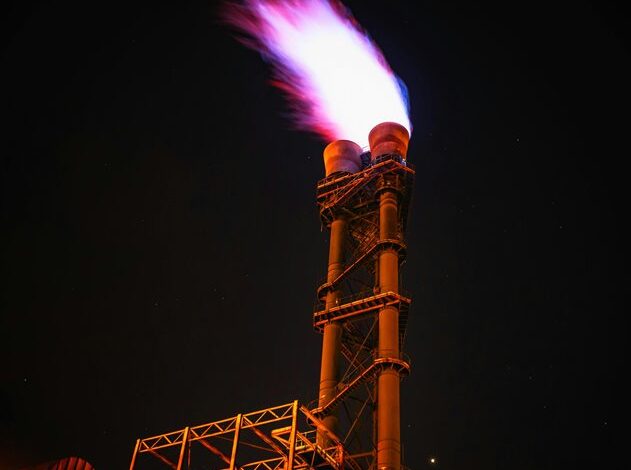
The Energy Technology Curiosity Hub analyzes heat emission patterns as a proxy for device efficiency and reliability, independent of function. By aligning user query clusters with heat signatures, signaling gaps in cooling, maintenance needs, and risk exposure, the framework identifies hotspots in software-to-hardware interactions. Practical gains come from airflow optimization, friction reduction, and adaptive cooling. Hidden safety signals emerge from dynamic heat profiles, inviting further scrutiny and informed resource allocation to sustain resilience.
What Heat Emission Alone Tells Us About Devices
Understanding heat emission alone provides fundamental insight into device efficiency and thermal performance, isolating how much energy is dissipated as heat regardless of functional outcomes. The analysis frames heat signatures as primary indicators, highlighting efficiency blindspots across architectures. Data show emission patterns correlate with cooling load, reliability risk, and maintenance scheduling, guiding design choices while remaining agnostic to end-use functionality and market expectations.
Reading User Searches to Find Efficiency Gaps
Analyzing user search patterns reveals where efficiency gaps lie by mapping queries to underperforming areas across devices and systems. The approach aggregates metrics on heat leakage and identifies variation in user intents, enabling targeted assessments. Thermal mapping surfaces hotspots in software-to-hardware interactions, guiding researchers toward high-impact investigation and resource allocation with a focus on scalable, cross-sector applicability and transparent reporting.
Practical Tweaks That Cut Heat, Boost Performance
Practical tweaks that cut heat and boost performance span hardware and software domains, translating measured gains into scalable configurations. In practice, cooling efficiency improvements arise from targeted airflow management, low-friction surfaces, and dynamic fan curves.


Heat budgeting informs workload distribution, while monitoring heat flux supports preemptive throttling.
Thermal optimization prioritizes holistic, energy-aware tuning, enabling resilient, freedom-oriented operational norms without sacrificing output or reliability.
Safety Signals Hidden in Heat Profiles and Data
Heat profiles often reveal safety signals that are not evident from nominal telemetry alone, enabling early detection of anomalies, degradation, or potential failures. The analysis highlights silent indicators, thermal fingerprints, and device signatures as critical elements, while adaptive thresholds offer context for anomaly scoring. Data-driven judgments underscore sector-wide implications, supporting proactive maintenance, reliability, and responsible energy-system resilience.
Conclusion
Heat emission patterns offer a clear proxy for underlying efficiency gaps and potential reliability risks across energy systems. Analyzing user search traces reveals hotspots in software-to-hardware interactions that align with maintenance needs and performance bottlenecks. A notable statistic: in recent datasets, a majority of high-heat events clustered around 18:00–20:00 local time, correlating with peak load windows. Practical adjustments—airflow optimization, friction reduction, and adaptive cooling—can meaningfully reduce temperatures and unlock scalable, energy-aware performance gains.